

Autumn Hazards for Dogs: What Every Dog Owner Should Look Out For
Autumn can be one of the best times of year to get outside with your dog. Cooler temperatures, colourful woodland walks and crisp mornings can make daily adventures much more enjoyable.
However, the change in season also brings a few hidden hazards that dog owners should be aware of.
From fallen conkers and mushrooms to darker evenings and seasonal toxins, knowing what to look out for can help keep your dog safe while still enjoying everything autumn has to offer.
1. Conkers and Acorns
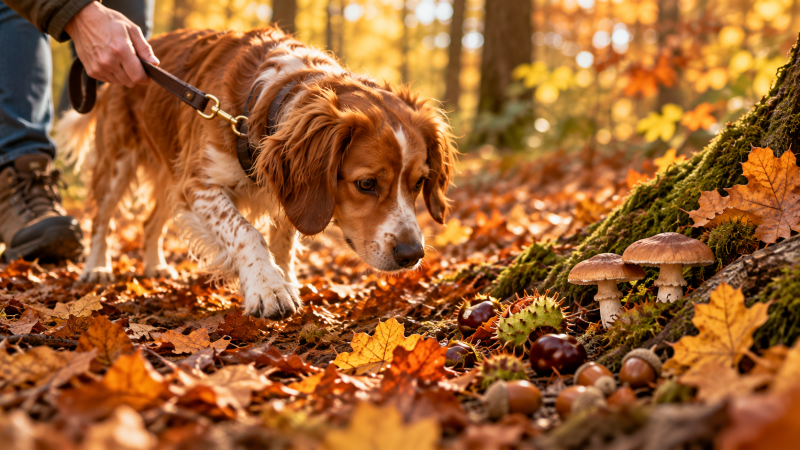
Autumn walks often mean paths covered in conkers and acorns, and while they may look harmless, they can cause problems for curious dogs. Conkers contain a substance called aesculin, which can be toxic if eaten. They can also cause a blockage if swallowed whole. Acorns contain tannins, which may cause stomach upset and, in larger quantities, can potentially affect the kidneys or liver.
Signs to watch for can include:
- Vomiting
- Diarrhoea
- Drooling
- Abdominal discomfort
- Reduced appetite
- Tiredness
If you think your dog has eaten conkers or a large number of acorns, contact your vet for advice.
2. Wild Mushrooms and Fungi
The damp conditions of autumn create the perfect environment for mushrooms and fungi to appear in woodland, parks and gardens. While many varieties are harmless, some can be extremely toxic to dogs. The difficulty is that toxic and non-toxic mushrooms can look very similar, so the safest approach is to prevent your dog from eating any wild mushrooms. Symptoms of mushroom poisoning may include vomiting, diarrhoea, tremors, weakness, excessive drooling or unusual behaviour. If your dog eats a wild mushroom, contact your vet as soon as possible. If it is safe to do so, take a photograph of the mushroom to help with identification.
3. Antifreeze
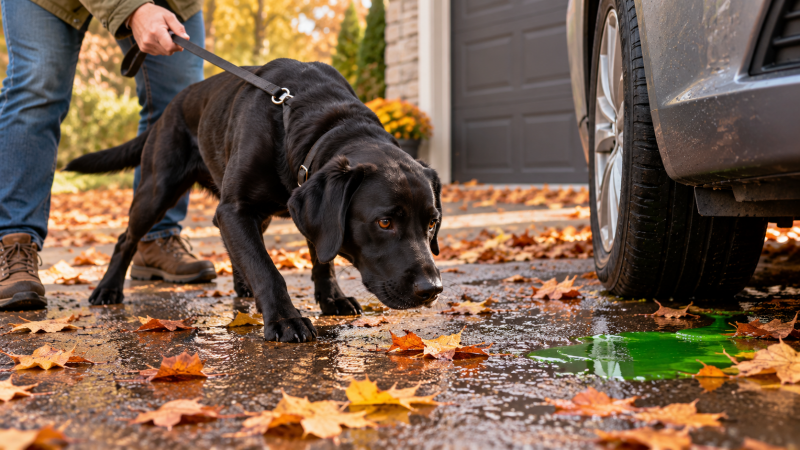
As temperatures begin to fall, antifreeze becomes a greater risk. Antifreeze containing ethylene glycol is extremely dangerous to dogs, even in very small amounts. Unfortunately, its sweet taste can make it appealing to animals. Check garages, driveways and car parks for spills or leaks, and always store antifreeze well out of your dog's reach.
Possible signs of antifreeze poisoning include:
- Vomiting
- Weakness
- Drinking or urinating more than usual
- Loss of coordination
- Tiredness
- Seizures
Antifreeze poisoning is a veterinary emergency. Seek immediate veterinary help if exposure is suspected.
4. Fallen Leaves
A pile of leaves may look like the perfect place for your dog to play, but leaves can hide more than you might expect.
Wet piles of leaves may contain:
- Sharp sticks
- Broken glass
- Animal waste
- Mould
- Mushrooms
- Small wildlife
Decomposing leaves may also harbour bacteria or fungi. There is nothing wrong with allowing your dog to enjoy the leaves, but keep an eye on what they are sniffing, chewing or digging through.
5. Darker Walks
Autumn means shorter days, and many dog owners suddenly find that morning and evening walks are taking place in low light or complete darkness.
Visibility becomes important for both you and your dog.
Consider using:
- Reflective collars or harnesses
- Reflective leads
- LED collar lights
- High-visibility coats
- A torch or headtorch
If your dog is walked off lead, remember that other walkers, cyclists and drivers may struggle to see them.
6. Fireworks
For many dogs, autumn also marks the beginning of fireworks season. Unexpected bangs and flashes can cause significant stress, even in dogs that are normally confident. You can help your dog by creating a safe, quiet space inside the home where they can retreat if they feel anxious. Try to exercise your dog earlier in the day before fireworks are likely to begin and keep dogs securely on a lead during evening walks. Closing curtains, playing background music and providing a familiar bed or blanket may also help reduce outside noise.
7. Halloween Treats
Halloween brings another seasonal hazard: sweets and chocolate. Chocolate contains theobromine, which dogs cannot process in the same way humans can. Dark chocolate and cocoa products can be particularly dangerous. Some sugar-free sweets, chewing gums and baked goods may also contain xylitol, which is highly toxic to dogs. Keep Halloween treats safely stored away and make sure children understand that they should not share sweets with pets.
8. Seasonal Food Risks
Autumn often brings more family meals, cosy evenings and seasonal celebrations. Unfortunately, several common foods can be harmful to dogs, including:
- Grapes and raisins
- Onions and garlic
- Chocolate
- Alcohol
- Macadamia nuts
- Foods containing xylitol
- Cooked bones
It can be tempting to share food with those puppy-dog eyes watching you from across the room, but sticking to dog-safe treats is always the safest option.
9. Fleas and Ticks Are Still Around
Many owners associate parasites with summer, but fleas and ticks do not disappear as soon as autumn arrives. Fleas can thrive inside warm homes throughout the colder months, while ticks may still be active during mild autumn weather. After woodland or countryside walks, check areas such as:
- Around the ears
- Neck
- Armpits
- Groin
- Between the toes
Speak to your vet about the most suitable parasite prevention routine for your dog.
10. Muddy Walks and Paw Care
Autumn walks often mean mud, puddles and wet grass. Regularly check your dog's paws for cuts, stones, thorns or irritation, particularly after long countryside walks. Drying your dog thoroughly after wet walks can also help prevent skin irritation, especially around the paws, legs and belly. Dogs with longer coats may benefit from having excess fur around the paws trimmed to prevent mud and debris from building up.
11. Reduced Temperatures
Although most healthy dogs cope well with cooler autumn weather, puppies, older dogs and smaller breeds can feel the cold more quickly. Dogs with short coats may also appreciate an extra layer during colder walks. Watch for signs that your dog may be uncomfortable, including shivering, lifting their paws, slowing down or trying to turn back home.
Enjoy Autumn Safely
Autumn should still be a season full of exploring. A little extra awareness can make the difference between a relaxing woodland walk and an unexpected trip to the vet.
Keep an eye on what your dog is eating, check their paws and coat after walks, make sure they can be seen during darker evenings and keep seasonal foods and chemicals safely out of reach.
And most importantly, enjoy those crisp autumn walks together.
At Apple Patch Pet Care, we believe that supporting your dog's wellbeing is about the little things we do every day — from good nutrition and regular exercise to enrichment, preventative care and plenty of time spent together.
Natural care. Happier dogs. Brighter days together.
Add comment
Comments